Dual-Receive.
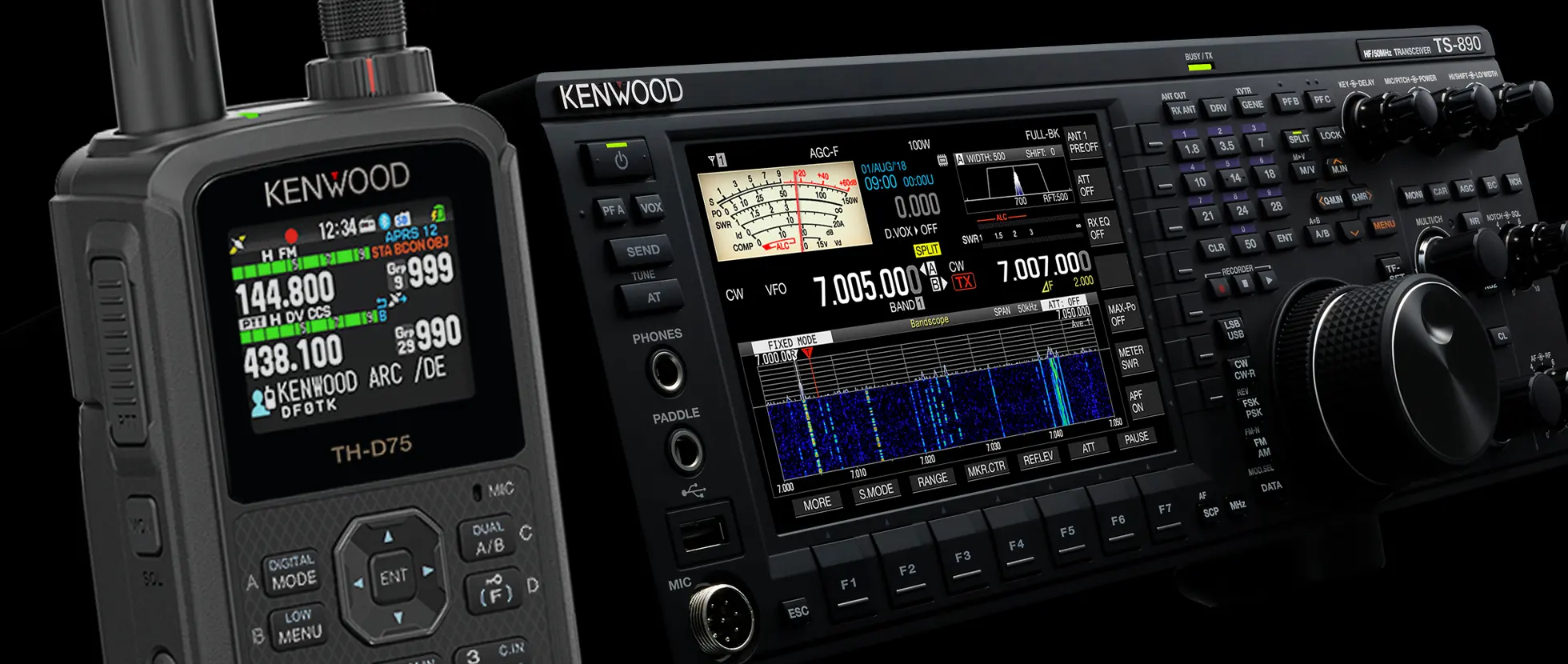
Dual-band Amateur Radio transceivers operate on the VHF and UHF bands. The radios have a single high-spec antenna port and their internal filter circuitry passes the signal to both band sections simultaneously. Separate volume and squelch controls for each band means the operator can monitor two frequencies at the same time, even if both are on the same band.
EchoLink®
Is a world-wide VoIP/Amateur Radio network. The TM-V71E and the TM-D710E mobile transceivers have dedicated functions, ports, connector cable sets and free software to make operating this mode as simple as possible.
FleetSync & FleetSync II.
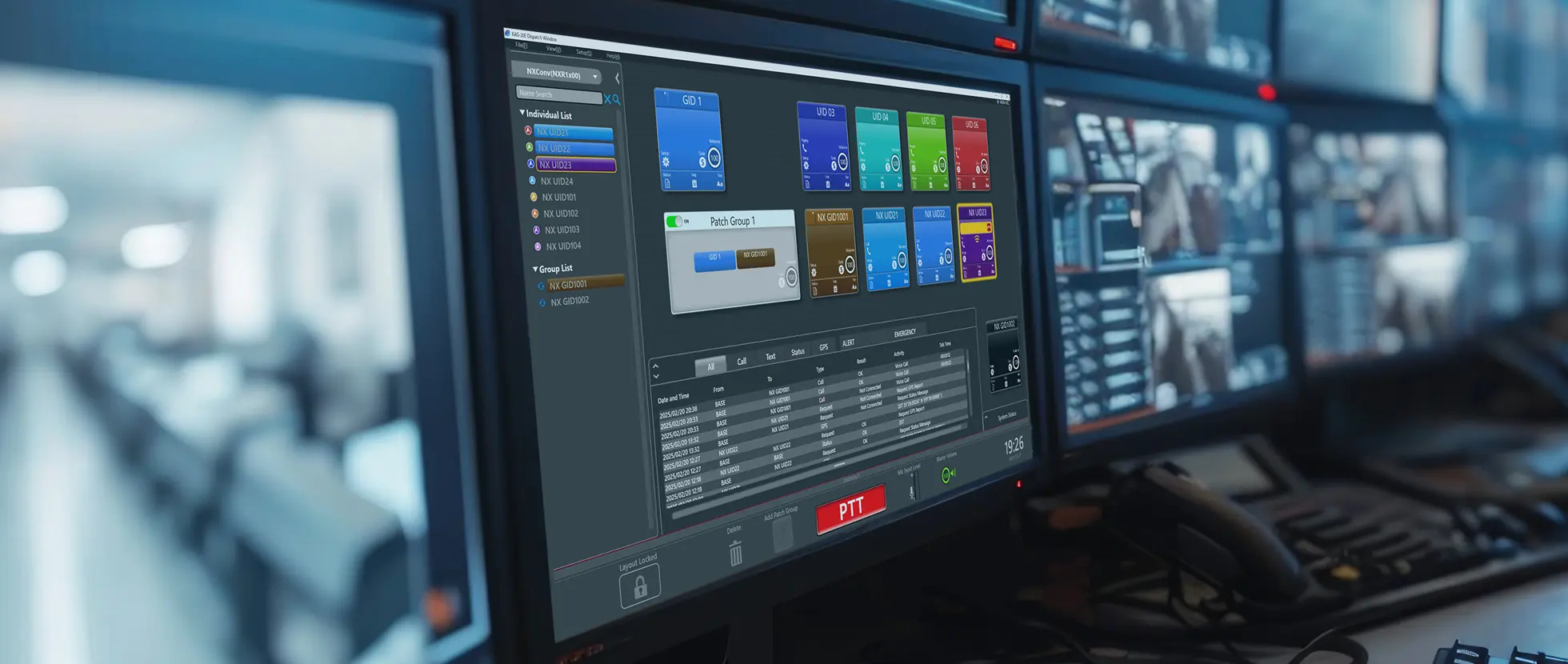
These are digital electronic signalling systems built-in to some of our high-end two-way Business radios which offer digital fleet unit identification, selective calling, status messaging and text messaging for dispatch operations. Every time the radio transmits, it sends out its identity in a digital format (this is known as PTT ID) - it is transmitting a digitally coded identity number (known as digital ANI) for instant identification of each call. The radios can also transmit a special Emergency code to highlight that an operator may have a problem. Selective calling means that each radio on the system can be called individually, since each has its own electronic identity code. Depending on which radio model is in use, short/long text messages can be transmitted and received.
Internet Voice-over-IP operation.
The TS-480HX and TS-480SAT Amateur Radio transceivers can be controlled remotely via the Internet. In addition they can transfer both Receive and Transmit audio via VoIP for fully remote operation. “Remote” could be via Wi-Fi from your garden to the room where the radio is installed, or it could be around the world on a broadband connection.
Click to enlarge
IP-55
This is one of a range of international standards that define the resistance of a product to various environmental hazards.
IP stands for “Ingress Protection” and the IP-55 standard covers dust as well as low pressure water jets from any direction (often known as “driving rain” protection).
Kenwood radio products carrying the IP-55 rating are therefore built to this high standard of protection against the sort of factors found in normal use.
ISO-Mark
Electrotechnical standards are harmonized around the world by the International Organization for Standardization (ISO).
Amongst its primary internationally recognised standards is ISO 9001, for Quality Management.
Kenwood Communications Equipment Division is certified under ISO-9001 by UKAS (United Kingdom Accreditation Service) and also by the Japan Quality Assurance Organization (JQA).
MIL-STD

This is a group of standards issued by the American Dept of Defence.
Originally conceived to regulate quality control and fitness-for-purpose of items used by the American military, it is now also widely applied to civilian products because it’s recognised world-wide.
There are many individual factors that can be assessed – Kenwood is mainly concerned with MIL-STD’s environmental standards such as temperature/temperature shock, salt fog, vibration, rain etc. (we haven’t yet tried the “Gunfire Vibration” test!).
QT, DTMF and 5-tone.
Before FleetSync digital signalling was invented, radios used several different analogue signalling systems based on audio tones. Different systems used different numbers of audio tones, in combination or singly, but they were all intended to add extra functions to the basic operation of the radio. They could switch on the receiver if they heard a pre-set tone from another radio, so that both stations could make contact. On more complex multi-radio systems these tone combinations helped manage the radio traffic on the channel. 5-tone signalling was the most sophisticated and can now be used in combination with digital FleetSync for short/long text messaging (via suitably equipped radios). Even today analogue signalling is an important function for many users and our radios continue to provide all the current formats.
Remote Head Unit
This feature enables a mobile radio transceiver to be more easily installed in a vehicle, or mounted in a base-station, by separating the control head from the main body.
The two parts are connected together by a control cable; the microphone, antenna and accessory cables then plug in to the head or the body as appropriate.
Some Kenwood transceivers are designed to have a permanently detached head, others are supplied as standard with the head clipped on to the body but with optional “remote mounting” kits available.
TX/RX AF DSP.
16-bit Digital Signal Processing is implemented at audio-frequency to handle noise reduction, equalizers and audio filters.
Voice Inversion Scrambler.
Found in many of our Business two-way radios, this function scrambles the operator’s voice before transmitting it so that it is incomprehensible to normal casual eavesdropping. The radio that is receiving the scrambled signal is pre-set with a matching code to unscramble it, converting it back into normal speech for the listening operator.